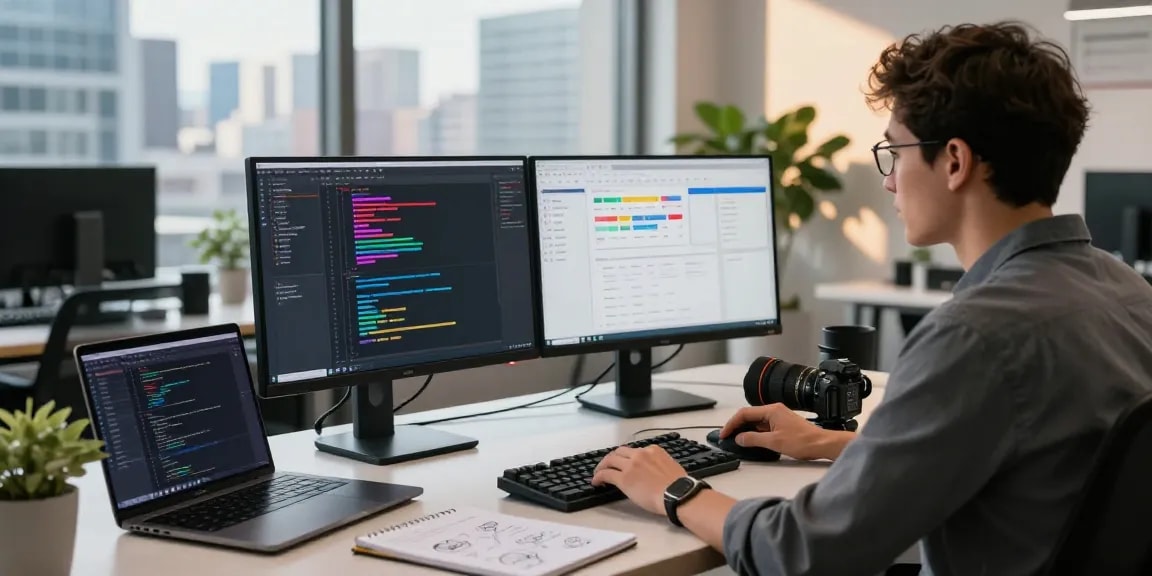
Best Laptops for Programming Students guide with top picks, specs, and tips to choose the perfect coding laptop for beginners and developers.
The best laptops for programming students and beginner developers balance performance, battery life, and affordability. A good coding laptop should have a fast processor, at least 8–16GB RAM, SSD storage, and a comfortable keyboard. Choosing the right device boosts productivity and learning speed significantly.
Ever wondered why some coding students learn faster while others struggle with laggy laptops and slow compilers? The truth is simple—your laptop can either speed up your growth or slow you down.
The best laptops for programming students and beginner developers are those that offer smooth performance, reliable speed, and long-term usability without breaking the bank. Let’s break it all down in a simple, practical way.
Why Choosing Right Laptop Matters 💻
A programming laptop is not just a device. It is your daily learning partner. Slow machines can frustrate beginners and reduce motivation quickly.
A good laptop helps you run code, test apps, and multitask without delays. It also makes learning smoother and more enjoyable.
Key Specs Programming Students Need ⚙️
Before buying, you must understand what really matters. Not all specs are equally important for coding tasks.
Focus on performance-related components that directly affect speed and efficiency.
Key essentials include:
- Fast processor (Intel i5/Ryzen 5 or better)
- Minimum 8GB RAM (16GB preferred)
- SSD storage for faster loading
- Full HD display for better clarity
These basics ensure smooth programming experience.
Budget vs Performance Balance 💰
Most students struggle between affordability and power. The trick is finding the right balance.
You don’t need the most expensive laptop to start coding. Mid-range laptops often deliver excellent performance.
Budget Range
Best Use Case
Expected Performance
Low Budget
Learning basics, web coding
Basic multitasking
Mid Budget
App development, databases
Smooth performance
High Budget
AI, ML, heavy software dev
Advanced multitasking
Choose based on your current learning stage.
Best Entry-Level Laptops Overview 🧑💻
Entry-level laptops are perfect for beginners starting with HTML, CSS, and Python.
They are affordable and lightweight but still capable of handling basic coding tasks.
Most entry-level models include:
- 8GB RAM
- SSD storage
- Energy-efficient processors
These are ideal for students on a tight budget.
Mid-Range Laptops for Coding 🚀
Mid-range laptops are the sweet spot for programming students.
They handle IDEs like VS Code, Android Studio, and databases smoothly.
A good mid-range laptop offers:
- Better multitasking support
- Faster compilation speeds
- Improved thermal management
These laptops help students grow without hardware limitations.
High-End Laptops for Developers 🔥
High-end laptops are built for serious developers working on AI, ML, and large-scale applications.
They offer powerful performance and future-proof hardware.
Features often include:
- High-core processors
- Dedicated graphics cards
- 16GB–32GB RAM
These machines are ideal for professional-level coding tasks.
Windows vs Mac vs Linux Choice 🖥️
Choosing an operating system is just as important as hardware.
Each OS has its own strengths and weaknesses.
OS Type
Best For
Pros
Cons
Windows
General coding
Flexible, affordable
Heavy updates
MacOS
App development
Smooth UI, stable
Expensive
Linux
Advanced coding
Free, powerful tools
Learning curve
Pick the one that matches your learning style.
Processor Guide for Coding ⚡
The processor is the brain of your laptop. It controls how fast your programs run.
For programming students, Intel i5 or Ryzen 5 is a solid starting point.
Higher-end CPUs help with:
- Faster code compilation
- Smooth multitasking
- Running virtual machines
A strong processor saves you hours of waiting.
RAM Requirements Explained 🧠
RAM determines how many applications you can run at once.
For beginners, 8GB RAM is acceptable. But 16GB is highly recommended.
More RAM helps with:
- Running IDEs smoothly
- Handling multiple browser tabs
- Working with large datasets
Low RAM often causes lag and frustration.
Storage Types and Speed 🗄️
Storage affects how fast your laptop loads files and software.
SSD is always better than HDD for programming tasks.
Storage Type
Speed
Recommendation
HDD
Slow
Not recommended
SATA SSD
Medium
Budget users
NVMe SSD
Fast
Best choice
Always prioritize SSD for better performance.
Display and Comfort Factors 👀
A good display reduces eye strain during long coding sessions.
Full HD resolution is the minimum standard today.
Important features include:
- Anti-glare screen
- Comfortable brightness levels
- Larger screen size (14–15.6 inches)
Comfort improves productivity significantly.
Battery Life Importance 🔋
Programming students often work in libraries or classrooms.
Long battery life is essential for uninterrupted learning.
Ideal laptops should offer:
- At least 6–10 hours battery backup
- Fast charging support
- Power-efficient processors
Good battery life gives freedom to code anywhere.
Portability for Students 🎒
Students carry laptops daily, so weight matters a lot.
Lightweight laptops are easier to manage during travel.
Key portability factors:
- Under 2 kg weight
- Slim design
- Durable build quality
A portable laptop reduces daily hassle.
Top Brands to Consider 🏷️
Brand reliability matters when choosing a programming laptop.
Some brands are known for better durability and performance.
Popular options include:
- Dell for reliability
- HP for balanced performance
- Lenovo for budget-friendly models
- Apple for premium experience
Choose based on support and budget.
Common Mistakes to Avoid ❌
Many beginners make mistakes when buying laptops.
Avoiding these can save money and frustration.
Common mistakes include:
- Buying low RAM devices
- Ignoring SSD storage
- Overpaying for unnecessary GPU
Smart decisions lead to better performance.
Final Buying Checklist 🧾
Before purchasing, always double-check your requirements.
A simple checklist helps avoid confusion.
- Minimum 8GB RAM (16GB preferred)
- SSD storage
- Strong processor (i5/Ryzen 5 or better)
- Comfortable keyboard
- Long battery life
This ensures a future-proof investment.
Learning Resources for Students 📘
To grow faster, students need guidance and practice materials.
Many developers also explore communities and blogs.
You can find helpful discussions on any active Technology Blog that focuses on coding tutorials and reviews.
Such platforms help beginners stay updated and motivated.
Career Growth and Skill Building 📈
A good laptop is just the beginning. Skills matter more in the long run.
Students should focus on:
- Consistent coding practice
- Real-world projects
- Open-source contributions
Many developers also publish content on Technology Write For Us platforms to share knowledge and gain exposure.
Future-Proofing Your Laptop 🔮
Technology evolves quickly, and so should your device.
Future-proof laptops reduce upgrade costs later.
Focus on:
- Upgradeable RAM
- Latest generation processors
- Strong build quality
Investing smartly today saves money tomorrow.
Conclusion
Choosing the best laptops for programming students and beginner developers is about balance, not just power. You need a machine that supports learning, growth, and long coding hours without slowing you down. Focus on RAM, SSD, and processor quality. A smart choice today builds a stronger coding future.
FAQs
What Is Best Laptop For Coding Beginners?
A good coding laptop has 8GB RAM and SSD storage. It should also have a fast processor. These features ensure smooth learning.
Is 8GB RAM Enough For Programming?
Yes, it is enough for beginners. However, 16GB is better for advanced tasks. It improves multitasking and speed.
Do Programmers Need Expensive Laptops?
No, beginners don’t need expensive laptops. Mid-range laptops work perfectly. Only advanced developers need high-end machines.
Which OS Is Best For Coding Students?
It depends on your needs. Windows is flexible and common. MacOS and Linux are better for advanced users.
Is SSD Necessary For Programming Laptops?
Yes, SSD is highly recommended. It improves speed and performance. It makes coding experience much smoother.